The AI future you can still choose
There's a lot of talk about where AI technologies will ultimately take us. Far less about what's already happening, and what's still down to us. This is a shorter look at the 3 AI futures we're living through and the choices leaders still have real control over.
.png)
Will AI technologies deliver utopia, or a crisis for work as we know it? It's the wrong first question if we want to retain agency over the outcome.
The more useful question is what happens between now and then, and what leaders can still decide.
At AIConfident, we split that question into 3 futures: the one we're already living in, the one whose tools already exist, and the one nobody can yet predict.
The future we know
Most people now have access to general-purpose AI tools. Many use them to save time on individual tasks. Far fewer organisations have turned that saved time into measured value. Anthropic's own Economic Index has found the same pattern: people are broadly under-using the capabilities already available to them.
At the sharper end, some teams are using AI tools to write code, build applications and redesign workflows. One IT director at a client of ours faced a £100k quote for a piece of software. Instead, he sat down with Claude Code and built it himself, in a weekend.
Set against that: a UK government survey found 84% of people in work have had no AI-related training in the past year (DSIT, 2026). And in every organisation, some people are rightly sceptical, often for real environmental or ethical reasons.
Importantly, these engagements are usually bounded by humans. A person asks, the AI tool answers, and a person decides what happens next. AI tools are helping humans do work. That's the future we're in, and it's happened in under 4 years.
The future we can see
Now picture asking an AI agent to book a train ticket, research sales prospects, or resolve a routine customer query, and having it act, not just answer.
That future doesn't need imagining. The tools already exist. This week, I asked Cowork to set our company up on an EV salary-sacrifice scheme. It worked through the steps, filled in forms, contacted our accountants, and came back to me only when it needed approval.
Instead of asking AI tools to help us do work, we're starting to delegate chunks of it outright. That changes the questions leaders face. What are we willing to delegate? Where does judgement still need to be human? What should an agent be able to access, and when should it check back with us?
The same capability is available to people with worse intentions. One agent platform, launched with too few safeguards, leaked security credentials and private data belonging to tens of thousands of people within weeks of going live. AI tools are also getting faster and cheaper at finding and exploiting security weaknesses.
None of this is speculative. It already exists. What's still uncertain is how fast it spreads, and what norms and guardrails organisations set while the shape of normal is still being decided. That makes this an important moment for leadership.
The future we don't yet know
Nobody knows how far AI capability goes from here: whether progress continues at roughly today's pace, accelerates, or runs into real barriers (like we’re seeing play out in the news now).
But capability was only ever part of the story. What we experience will also depend on where we choose to deploy these tools, who controls them, whose interests they serve, and where we decide human involvement still matters. Leaders across the economy and society will make many of those decisions.
That means this third future isn't something that simply happens to us. The choices made in the first two futures, by governments, companies, organisations and individuals, will shape which version of it we get.
What's still ours to decide
Uncertainty about that third future doesn't mean we don’t have agency in the first two. If anything, the time to lean into answering the important questions about the first two futures is now.
In the future we know, the task is to use what already exists well: building skills, proportionate governance, and genuinely engaging with the concerns people have. The latest research from Deloitte has found that 1 in 3 people who use generative AI tools at work do so without their employer knowing, and around half have no training on using it at all (Deloitte, 2026). That is a real risk for every leader and every business. But leaders have the opportunity to make the decisions now: to create a clear strategy, to set the guardrails and empower their staff.
In the future we can see, it's deciding what to delegate, and where human judgement stays in the loop. This decision can’t wait either. The tools for full delegation already exist and someone in your organisation may be testing them before you’ve set the principles or guardrails.
These choices, made now, are what shape the future we don't yet know.
We work through exactly this with leadership teams in our training sessions, helping them make these calls deliberately rather than by accident. If you're leading an organisation through this, you can see how our training works, and let's map out where your organisation has real agency, and where it doesn't yet.
How we used AI in writing this blog
The original article is a pre-read for AIConfident's leadership programme, written by Tim. His initial writing was all his own, drawn from workshops he's run with leaders on these three futures. He then asked Claude to challenge him on the article's purpose, help refine which subjects to include, find specific research to back up his arguments, and weave in text from articles he wanted to reference.
We then used Claude to shorten that article into this general overview piece, for readers less familiar with AIConfident. We asked Claude to cut it to under 800 words while keeping the three-futures framework.
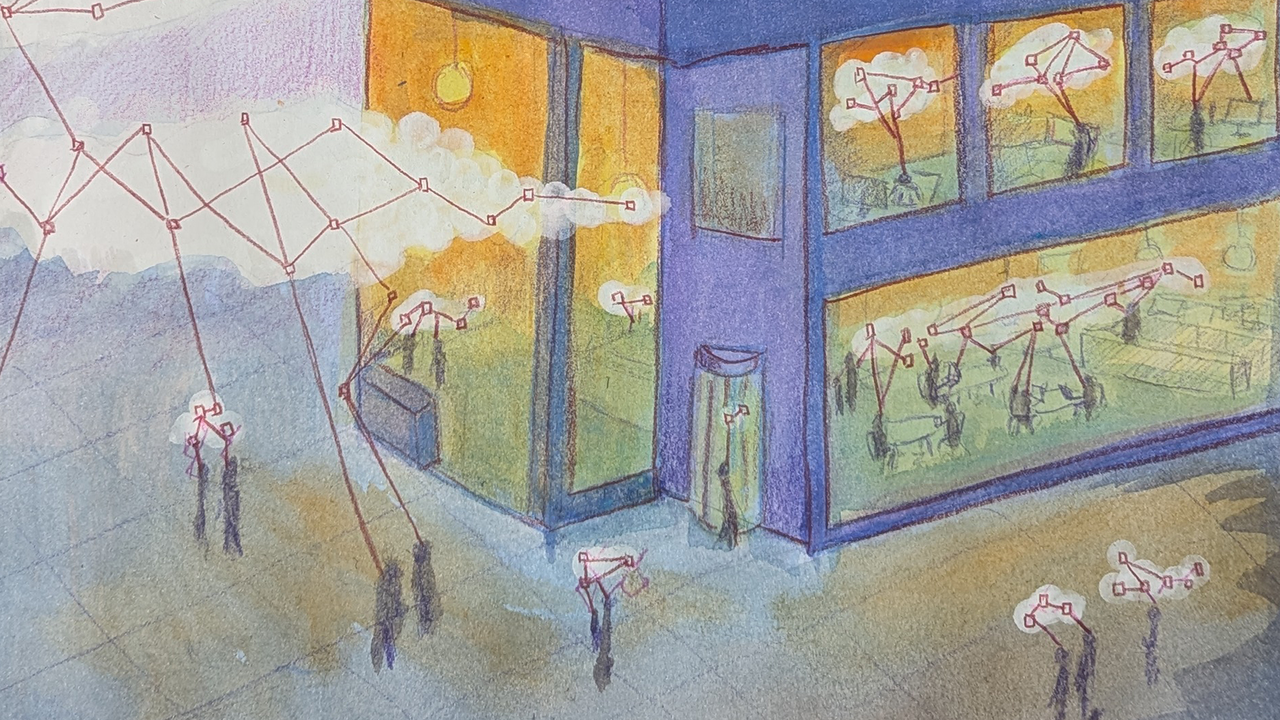
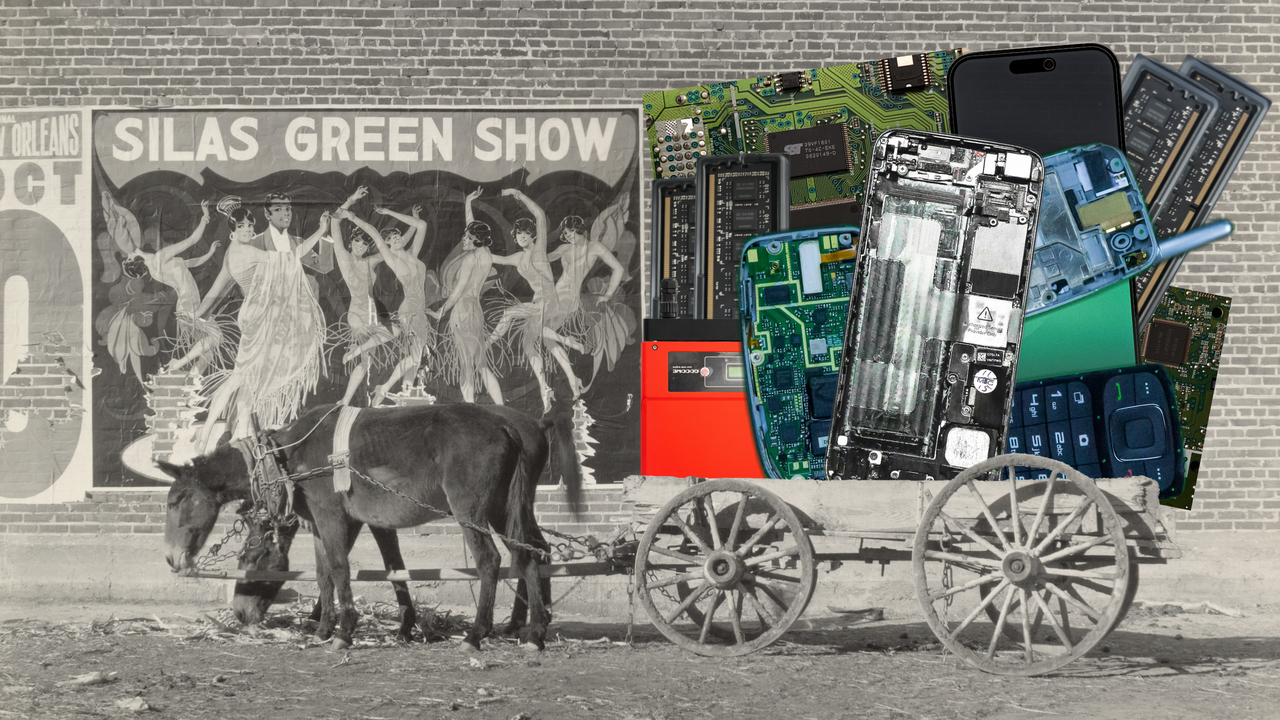
Images in this piece are from Better Images of AI. We use them instead of generic AI stock photography because most AI imagery reinforces public mistrust of AI, leans on harmful stereotypes and spreads misleading cultural tropes about the technology.
Image credit Jamillah Knowles & Digit, Better Images, Creative Commons Licence


We give purpose-driven organisations the confidence to thrive in an AI-enabled world.
A bit about the images on our website: throughout our website we have used images from the wonderful Better Images of AI. They’re a great source of AI-related images, freely available under a Creative Commons license, that specifically avoid Humanoid robots, glowing brains, outstretched robot hands, blue backgrounds, and the Terminator!